M87 black hole image: Is AI the best proven method?
The M87 black hole image has sparked interest in AI technology and its capabilities. This article explains the results from GenDIReCT and their implications for our understanding of black holes.
What is the M87 black hole?
The M87 black hole is a supermassive black hole situated at the center of the elliptical galaxy M87, approximately 53 million light-years away from Earth. It gained significant attention when scientists released the first-ever image of the M87 black hole in 2019, marking a monumental achievement in astrophysics. This image, captured by the Event Horizon Telescope, revealed the dark region surrounded by a glowing ring of gas and dust, providing crucial insights into the behavior of black holes.
Characterized by its immense mass, the M87 black hole is estimated to be about 6.5 billion times the mass of our Sun. Its study has opened new avenues for understanding gravitational physics and the nature of spacetime. The M87 black hole image continues to inspire researchers, leading to innovations in imaging techniques, including the exploration of AI-driven methodologies for further analysis.
How does AI analyze black hole images?
Artificial intelligence has become a crucial tool in the analysis of astronomical phenomena, including the iconic M87 black hole image. AI algorithms process vast amounts of data, identifying patterns and features that may be missed by human researchers. This approach offers several advantages:
- Speed: AI can analyze data at a much faster rate than traditional methods, allowing for quicker results.
- Accuracy: Machine learning models can reduce human error, enhancing the precision of image reconstruction.
- Scalability: AI techniques can handle large datasets, making them ideal for complex astronomical observations.
Recent advancements, such as the GenDIReCT model, showcase AI’s ability to produce detailed images of black holes, reaffirming its status as one of the best proven methods for exploring these enigmatic cosmic entities.
GenDIReCT’s findings explained
Recent findings from GenDIReCT provide new insights into the analysis of the M87 black hole image. This AI-driven approach has shown promising results in enhancing the clarity and detail of black hole images, making it a strong candidate for future astronomical research.
The study highlights several key points:
- Enhanced Resolution: GenDIReCT significantly improves the resolution of black hole images, allowing scientists to observe previously hidden features.
- Data Interpretation: The AI’s ability to interpret complex data sets aids researchers in understanding the underlying physics of black holes.
- Speed of Analysis: Utilizing AI accelerates the processing time, which is crucial for timely discoveries in the fast-paced field of astrophysics.
Overall, GenDIReCT’s findings suggest that AI might be the best proven method for analyzing the intricate details of the M87 black hole image.
Implications for astrophysics
The recent advancements in analyzing the M87 black hole image have significant implications for the field of astrophysics. As researchers continue to explore the depths of the universe, the integration of artificial intelligence (AI) is proving to be a game-changer.
AI not only accelerates the processing of astronomical data but also enhances the accuracy of image interpretation. This is particularly critical when studying complex phenomena such as black holes. The findings from GenDIReCT indicate that AI can uncover details that traditional methods might overlook.
Furthermore, the implications extend beyond the M87 black hole. The techniques developed could revolutionize how scientists approach similar astronomical challenges, paving the way for new discoveries and a deeper understanding of the cosmos.
Overall, the role of AI in astrophysics represents a promising frontier that could redefine our understanding of the universe.
Future of black hole research
The future of black hole research is poised for significant advancements, particularly in the study of the M87 black hole image. As technology evolves, researchers are increasingly turning to artificial intelligence to enhance their understanding of these cosmic phenomena. AI’s ability to process vast amounts of data allows scientists to analyze black hole images with unprecedented precision.
Furthermore, ongoing collaborations between astrophysicists and computer scientists are expected to yield innovative tools that will refine image analysis techniques. These developments could lead to more detailed observations and a deeper comprehension of black hole dynamics.
As we continue to explore the universe’s mysteries, the integration of AI in astrophysics may redefine our approach to studying phenomena like the M87 black hole, unlocking secrets that have remained hidden for centuries.
- Enhanced data processing capabilities
- Collaboration between disciplines
- Potential for groundbreaking discoveries
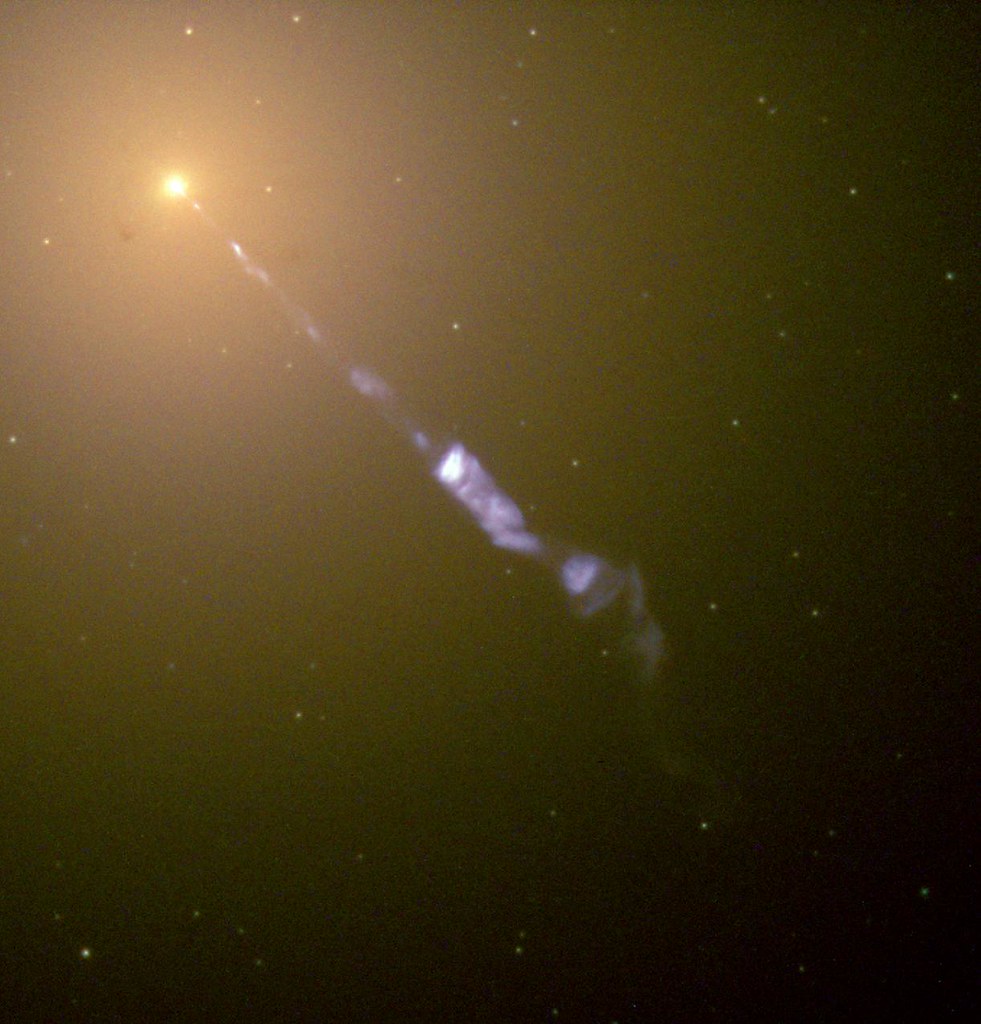
By NASA Hubble via Openverse
Where this came from
Related reading
Lead Azide Detonation: Clear Reasons Behind Delays · IITs IISERs Caste Gender: Best Proven Insights for Funding · Is Gomati Dairy Unit-2 the Best Proven Processing Facility?